Types of Metal Roofing
Choosing a new roof is one of the most significant decisions a homeowner can make. It’s a long-term investment in your property’s safety, value, and curb appeal. While asphalt shingles have been the traditional choice for decades, more homeowners are exploring the various types of metal roofing for their superior durability and lifetime value.
A metal roof isn’t just a single product but a category of systems, each with unique benefits. Understanding the differences is key to selecting a roof that protects your home and enhances its style and efficiency for years to come.
Which Metal Roofing Type Is Right for Your Home?
In the mountains of Western North Carolina and Eastern Tennessee, a roof has to do more than just keep the rain out. It needs to withstand sudden, powerful wind gusts, heavy downpours, and the occasional winter storm. The regional weather patterns around Asheville demand a roofing material with proven resilience. This is why selecting the right profile and installation method is so critical for local homeowners.
Your choice will depend on your budget, aesthetic preferences, and long-term performance goals. Here are the three most popular metal roof systems.
Standing Seam Metal Roofing
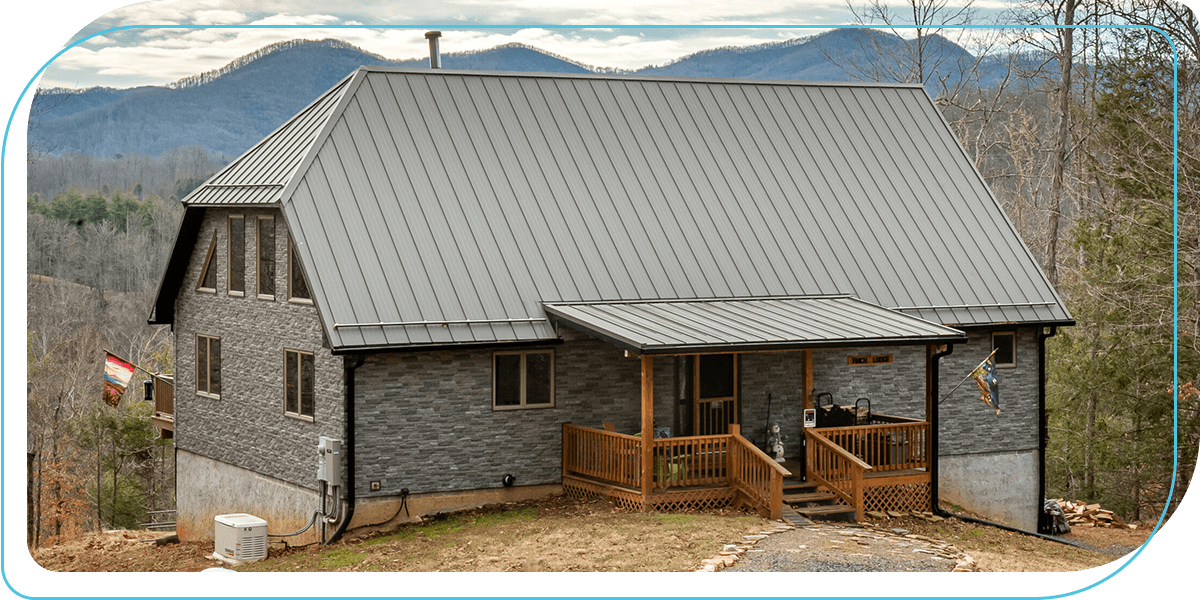
Often considered the gold standard in metal roofing, a standing seam system is defined by its clean, modern appearance and exceptional performance. The “standing seam” refers to the raised, interlocking seam that joins one vertical panel to the next. These design elements are both aesthetically pleasing and highly functional. Because fasteners are concealed between the panels, they’re completely protected from the elements.
This design eliminates the primary point of failure seen in other systems and creates a sleek, uninterrupted look from the curb. These systems are known for their incredible longevity. High-quality standing seam roofs can generally last for 50 years or more, providing a long-term solution for your home. Their robust construction also offers some of the highest wind resistance available, making them a wise choice for our mountainous terrain.
Metal Shingles
If you want something that looks a bit more traditional with the high-performance benefits of metal, metal shingles offer the perfect compromise. These systems have the appearance of classic materials like architectural shingles, natural slate, and wood shake. You get the timeless aesthetic you want without the maintenance and shorter lifespan associated with those materials.
Metal roofing shingles are stamped from high-quality steel or aluminum and coated with advanced finishes that provide long-lasting color and texture. They’re lighter than traditional slate, stronger than asphalt, and more fire-resistant than wood. These features make them a versatile option for a wide range of architectural styles, including historic homes and modern constructions.
Exposed Fastener Panels
An exposed fastener system is another common type of metal roofing, often seen on rustic or modern farmhouse-style homes. As the name implies, the fasteners used to secure the panels to the roof deck are visible. The large, overlapping panels are installed with screws and washers, which typically have a rubber grommet to create a seal against water.
This type of system is generally the most cost-effective metal roofing option, and installation tends to be faster than other methods. However, the exposed fasteners may be more susceptible to UV exposure and need periodic inspection and maintenance to prevent leaks. It’s a durable choice, but it requires more care than a standing seam system.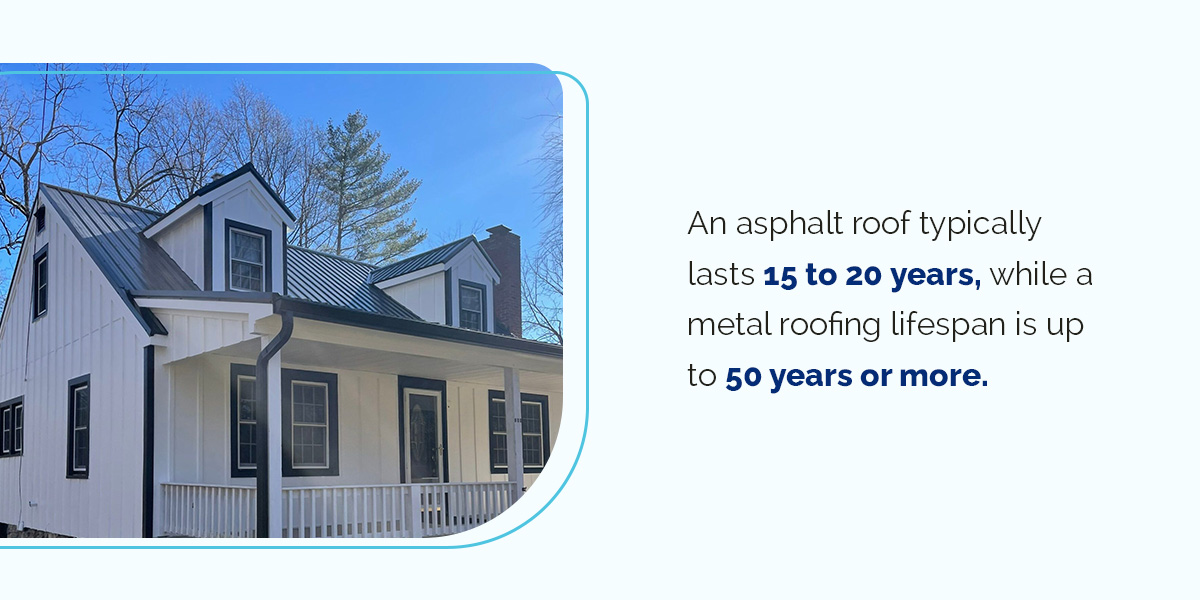
Metal Roof vs. Asphalt Shingles: Is the Switch Worth It?
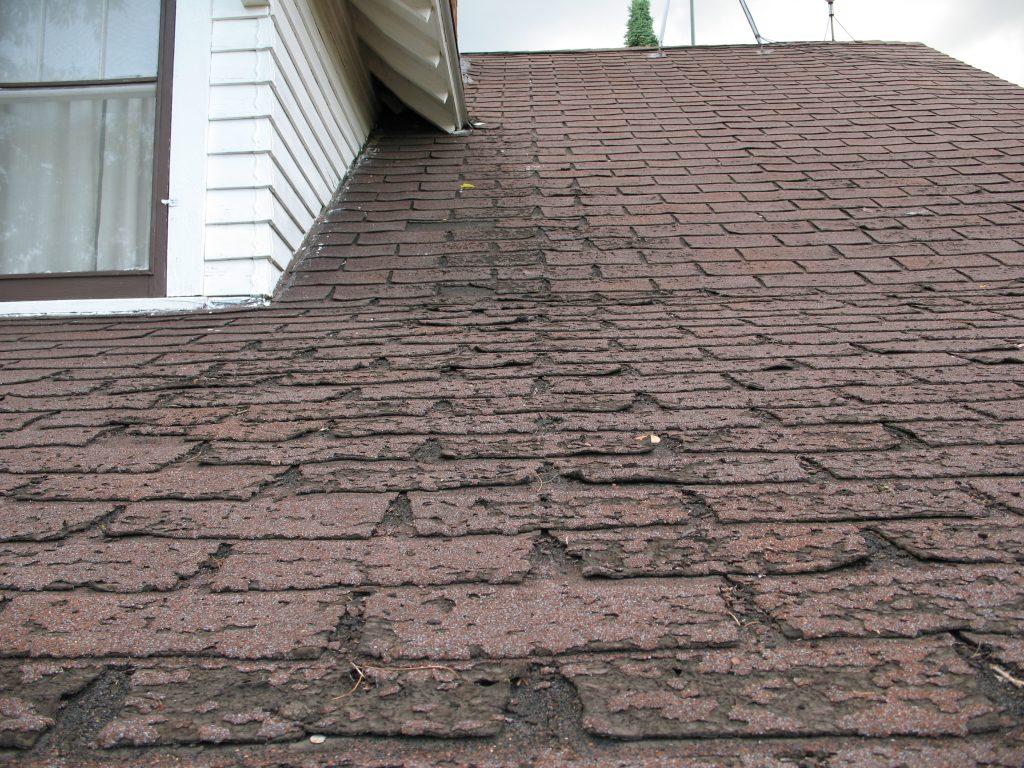
Thinking of trading your asphalt shingle roof for a metal one? When you compare metal roofing types to asphalt shingles head-to-head, the benefits become even clearer.
- Lifespan: An asphalt roof typically lasts 15 to 20 years, while a metal roofing lifespan is up to 50 years or more.
- Energy efficiency: According to the U.S. Department of Energy, reflective metal roofing can stay up to 50° Fahrenheit cooler than a dark asphalt roof in the sun, which can translate into a reduction in home cooling costs.
- Resale value: A metal roof is a major selling point. Metal roofs consistently allow homeowners to recoup a higher percentage of their investment upon resale compared to an asphalt shingle replacement.
- Sustainability: At the end of its long life, a metal roof is 100% recyclable. Asphalt shingles contribute millions of tons of nonrecyclable waste to landfills each year.
Metal Roofing Durability, Cost, and Noise
Beyond the specific type, homeowners often want to know more details about a few key characteristics of metal roofing.
- Durability: Quality metal roofing systems are a “one and done” solution. They’re engineered to last a lifetime, with some systems tested to withstand high winds. They won’t rot, crack, or burn, and are impervious to insects. This level of durability means you won’t have to worry about another costly roof replacement for years.
- Noise: The idea of a loud, tinny roof during a rainstorm is a common myth based on old barns. Modern metal roofing installation requires a solid roof deck, often with a special underlayment for added insulation. Professionally installed residential metal roofs are no louder than any other roofing material.
- Cost: The up-front metal roofing cost is higher than for asphalt shingles. However, the true cost is measured over the life of the roof. Metal roofing provides a significant return on investment through its longevity, low maintenance, and direct cost savings. Installing an impact-resistant metal roof may even contribute to lower insurance premiums.
FAQs About Residential Metal Roofing
Want to learn more about the best metal roofing option for you? Here are some common questions and answers on the topic.
1. Can You Install a Metal Roof Over My Old Shingles?
While it’s sometimes possible, depending on the condition of your existing roof, we almost always recommend a full replacement. Removing the old shingles allows us to inspect the roof deck for rot or damage and ensure a perfectly sound foundation for your new, permanent roof.
2. Do I Have to Get a Plain Gray Metal Roof?
No. Modern metal roofing comes in a vast array of colors, finishes, and profiles to match any architectural style and personal taste, from stone-coated metal roofing hues to subtle earth tones.
3. Will a Metal Roof Attract Lightning?
No. This is a common misconception. A metal roof does not increase the likelihood of your home being struck by lightning. If it is struck, the material’s conductivity can actually help disperse the energy safely throughout the structure.
Get a Free Metal Roofing Assessment
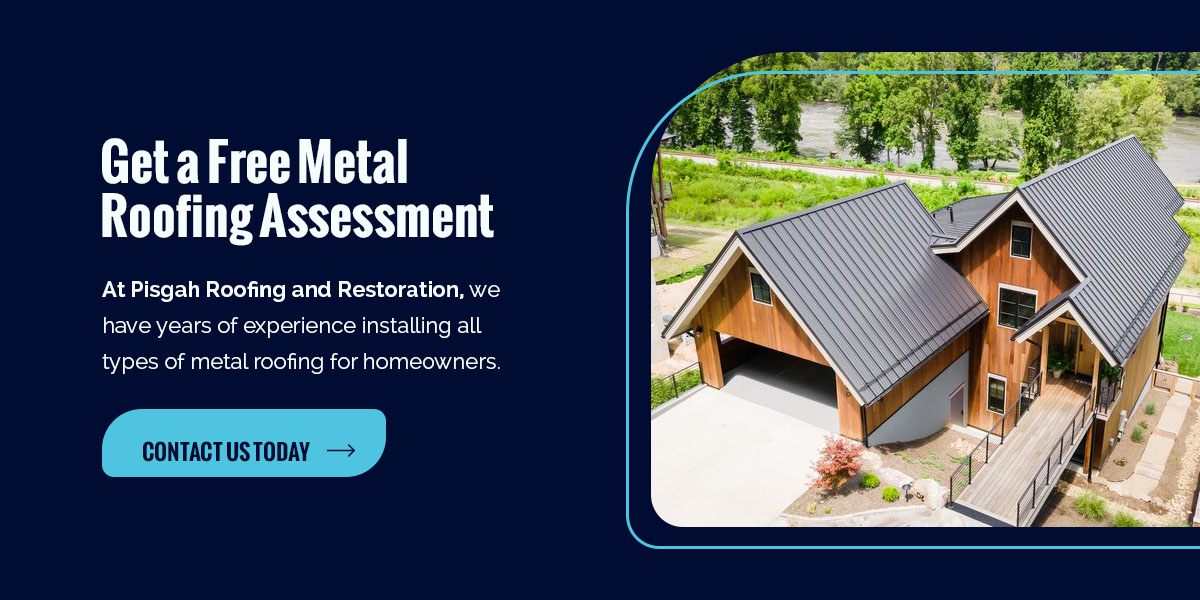
Deciding on the right roofing material can feel overwhelming, but you don’t have to do it alone. The best way to understand which system is right for your home and budget is to speak with an expert. At Pisgah Roofing and Restoration, we have years of experience installing all types of metal roofing for homeowners across Western North Carolina and Eastern Tennessee.
We can walk you through the options, explain the benefits of each system, and provide a detailed, no-obligation assessment. Contact us today to schedule your free consultation and discover the lasting value of a metal roof.
Popular Posts
Benefits and Types of Roofing Shingles

Marley Howard